
Project 377 Home
— LONGFORM CASE STUDY
INTRODUCTION
Good afternoon,
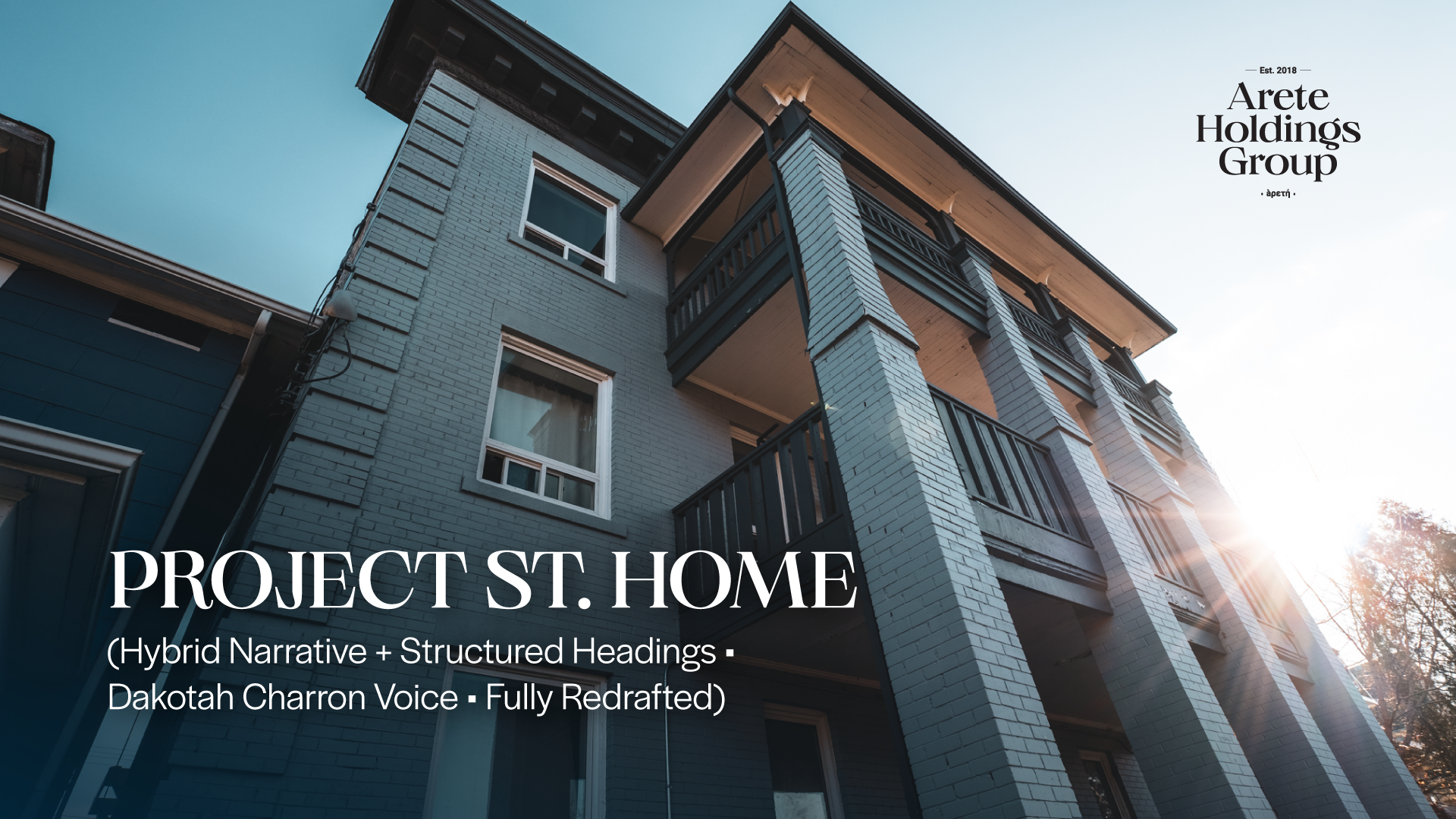
Project 377 Home Street is a clear example of what happens when disciplined planning, strong due diligence, and strategic execution come together. The property was brought to us as an underperforming multifamily asset with low rents, aging interiors, and a valuation that did not reflect its true potential. Arete’s objective was to create a long-term hold with strong cash flow, stable tenancies, and an opportunity to recover all initial invested capital through a refinance.
This project required a complete repositioning plan: correcting rent issues, modernizing the suites, strengthening the income profile, and preparing the building for a major valuation lift.
With Highest Regards,
Dakotah Charron
PROJECT HEADINGLEY
— THE FULL STORY

PROBLEM
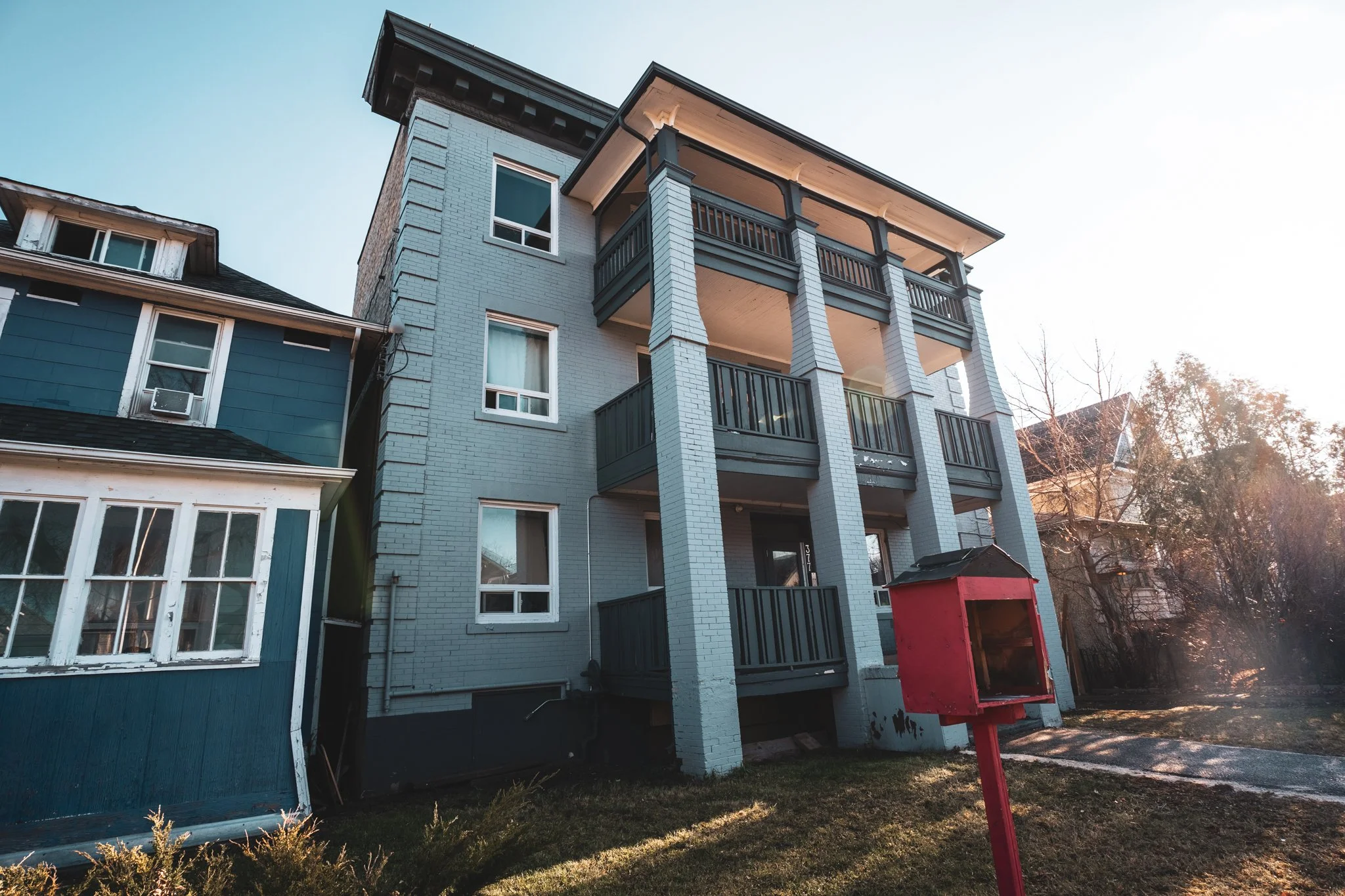
When we first evaluated 377 Home Street, several challenges became immediately apparent. The building, while structurally sound, was dated inside. Rents were low and inconsistent with the market. Long-standing tenants had become accustomed to older units and had not seen meaningful improvements in years. As a result, the financial performance of the building was not aligned with what the property could produce.
At the same time, we needed a clear pathway to justify a future refinance. Without substantial work, the building’s value would not increase enough to return the invested capital. The project required a specific, coordinated approach: renovation, rent repositioning, compliance corrections, and a structured stabilization plan.

THE DISCOVERY
During our assessment, we identified three key opportunities.
First, the building’s condition did not match the rents being charged. Renovation presented immediate upside. Second, the surrounding rental market supported higher rents for well-renovated, well-managed suites. Third, the building had the structural capacity to deliver value far beyond its purchase price — but only with a complete repositioning.
Finally, we confirmed the building met the criteria for a refinance after stabilization, giving us a clear exit strategy on the initial capital investment.
Together, these discoveries shaped our plan.
Strategy
Our strategy focused on four pillars.
The first was renovation and modernization. This included a full interior upgrade to enhance appeal, justify market rents, and increase overall building value. The second was rent stabilization, ensuring future rent levels aligned with allowable increases and reflected the post-renovation condition. The third was full building stabilization, ensuring that after renovations, each suite was leased quickly at the new market rates, minimizing vacancy loss. The fourth was refinance readiness, structuring the building’s finances, tenancy agreements, and income profile to support a significant boost in appraised value.
This approach created a clear, streamlined path: purchase, renovate, stabilize, refinance, and recover the capital.
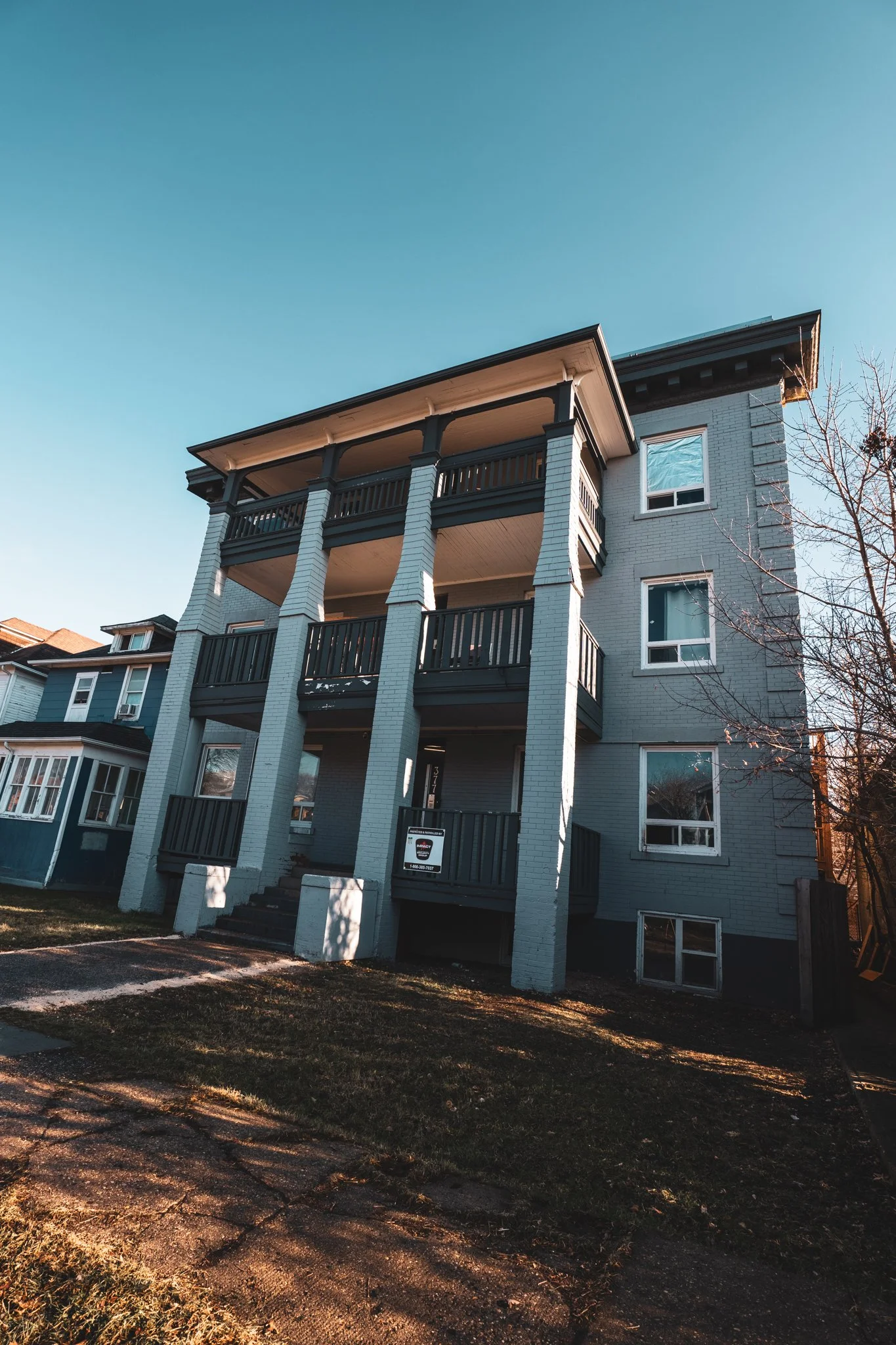
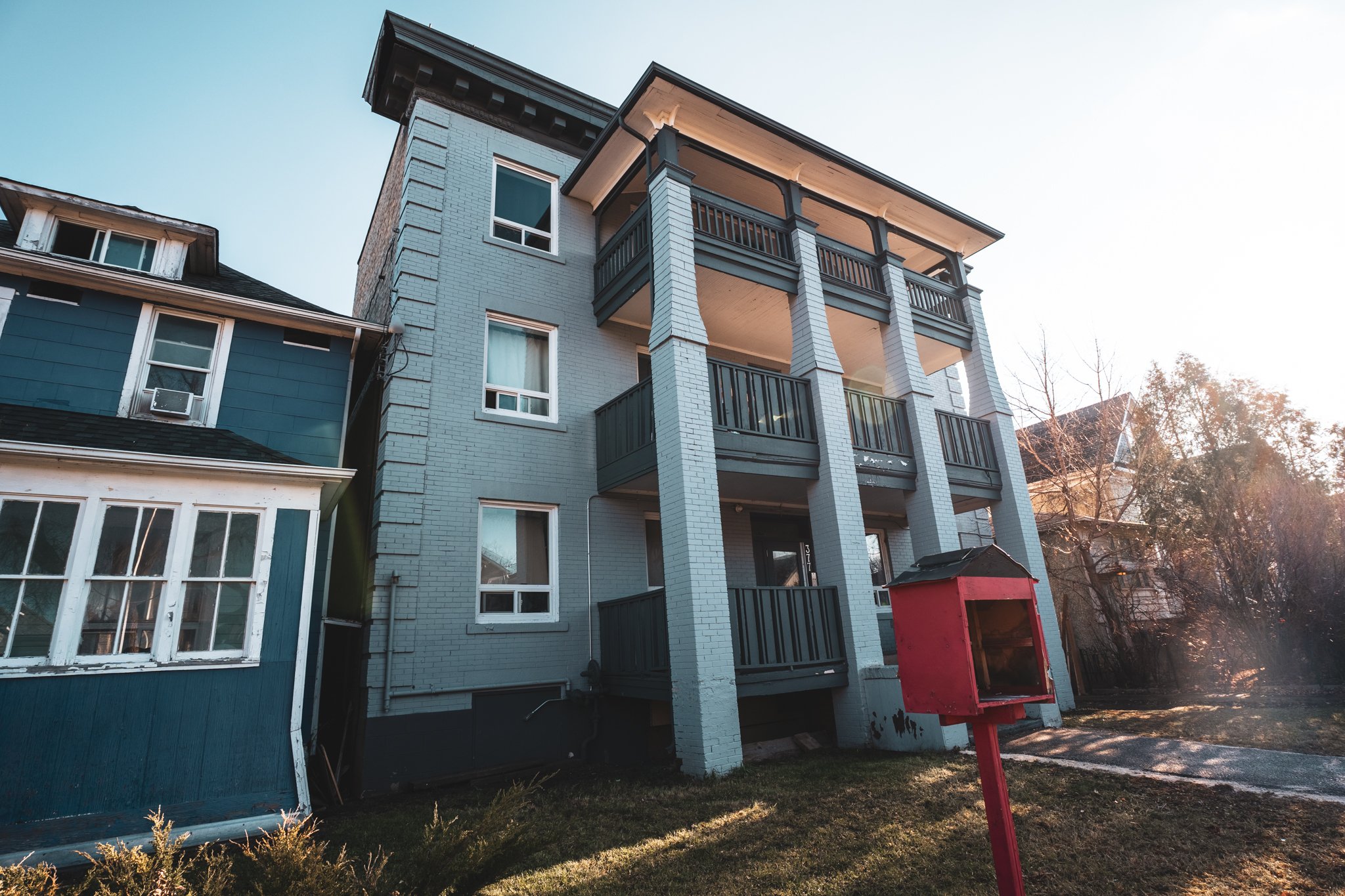
THE EXECUTION
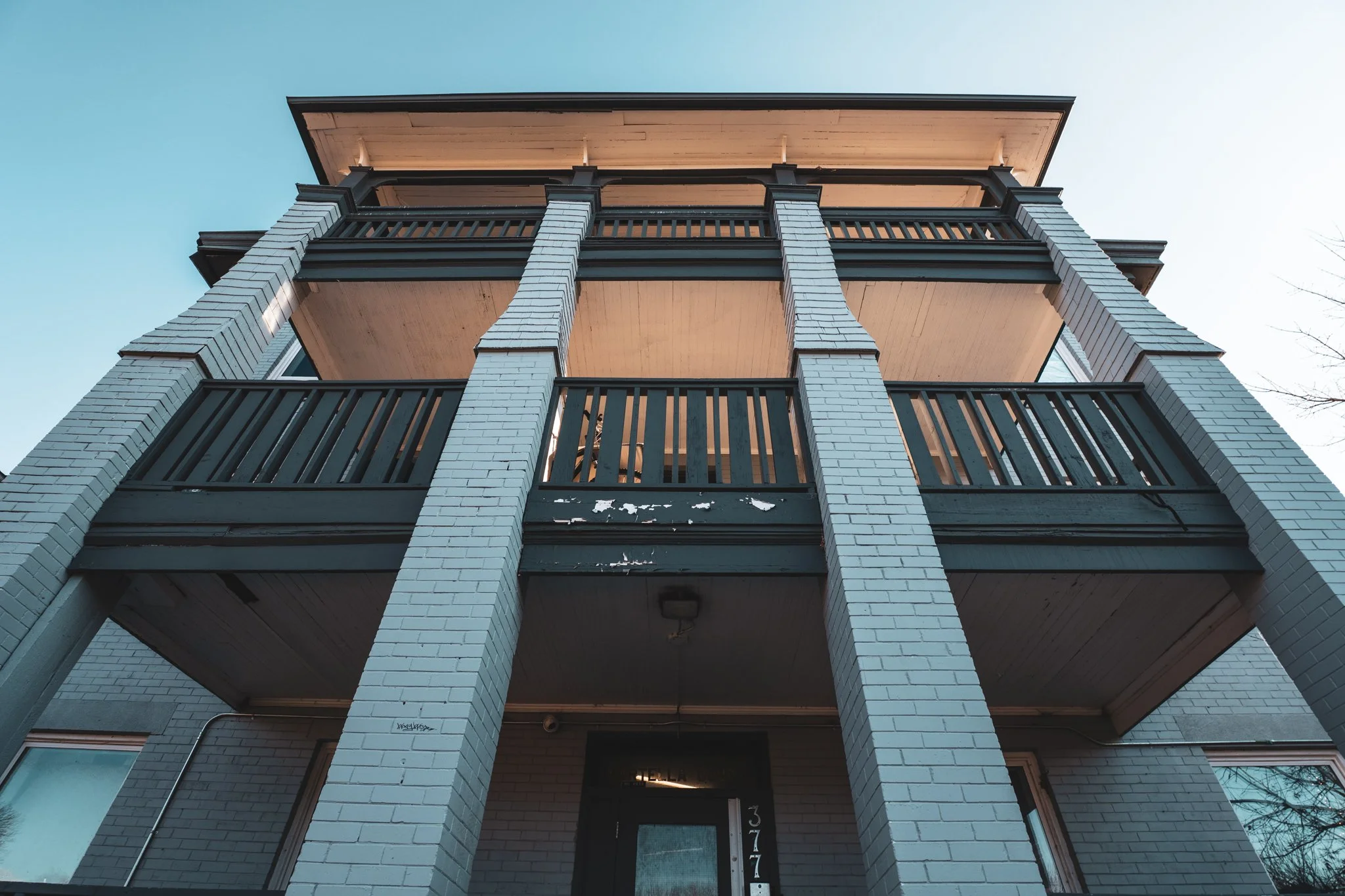
We acquired the building for $1,011,000 and immediately began renovations. Over the course of the project, $365,000was invested into improving the asset — updates that touched nearly every suite and significantly elevated the building’s overall aesthetic and structural quality.
Once renovations were underway, we proceeded with rent restructuring. Units were brought to market rent, compliance issues were corrected, and new leases were issued to reflect the improved condition of the building. Because the renovations were completed in a structured sequence, we were able to begin leasing units before the entire project was finished, resulting in quick fill times and a smooth stabilization phase.
Within four months, the building reached 100% occupancy. Shortly after, we submitted for refinancing and secured a new valuation of $1.9 million. This refinance not only returned 100% of our initial capital, but also produced additional refinance proceeds — effectively giving ourselves and our partners full capital recovery and a surplus while continuing to hold the asset.
The project, from acquisition to refinance, was fully completed in six months.