
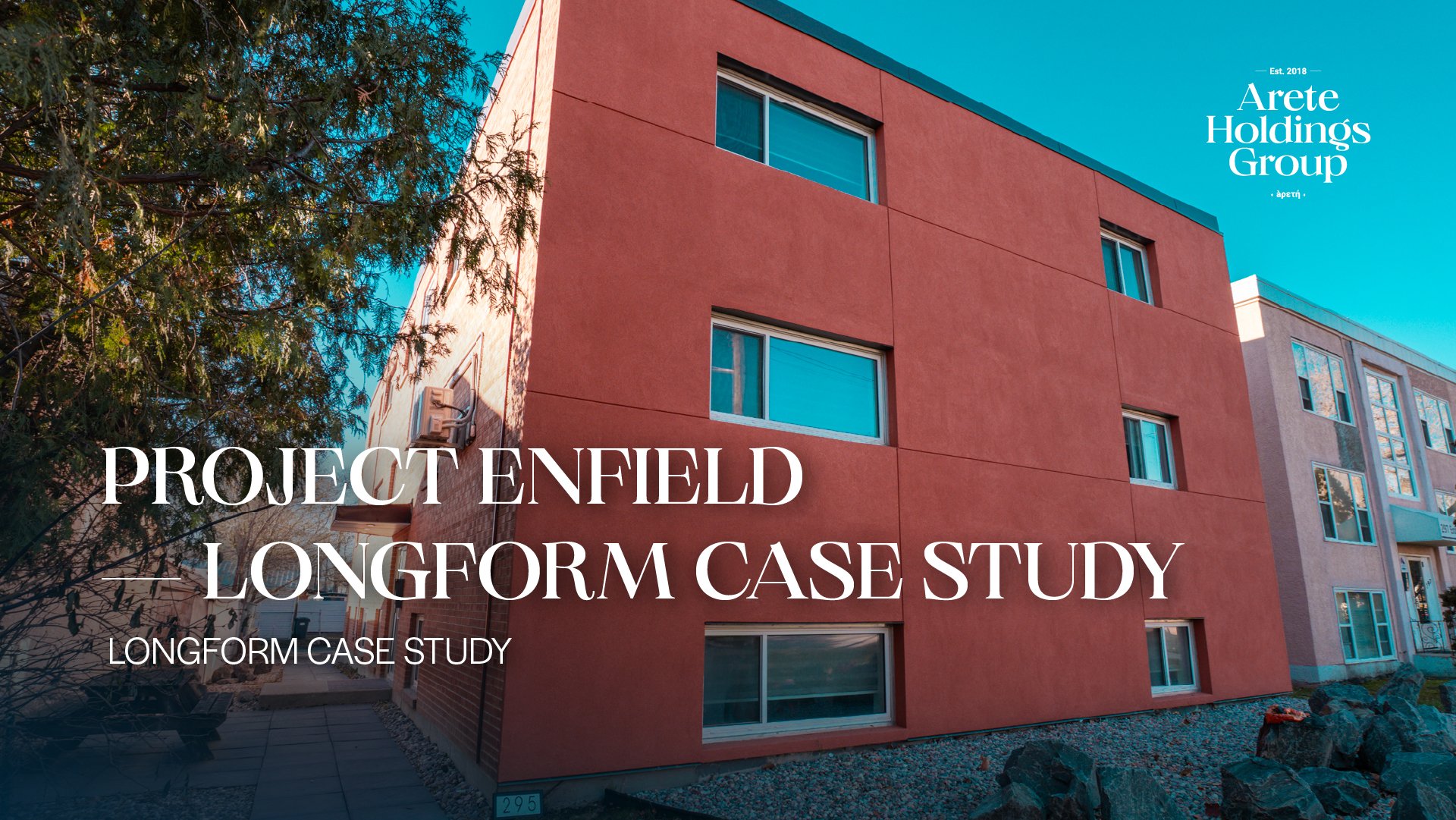
PROJECT ENFIELD — LONGFORM CASE STUDY
Opening
There’s a certain type of call I get that I can recognize within seconds — the tone in the investor’s voice, the stress, the confusion.
It’s the “I thought this was a great deal, and now I realize I’m in real trouble” call.
And that’s exactly how Project Enfield started.
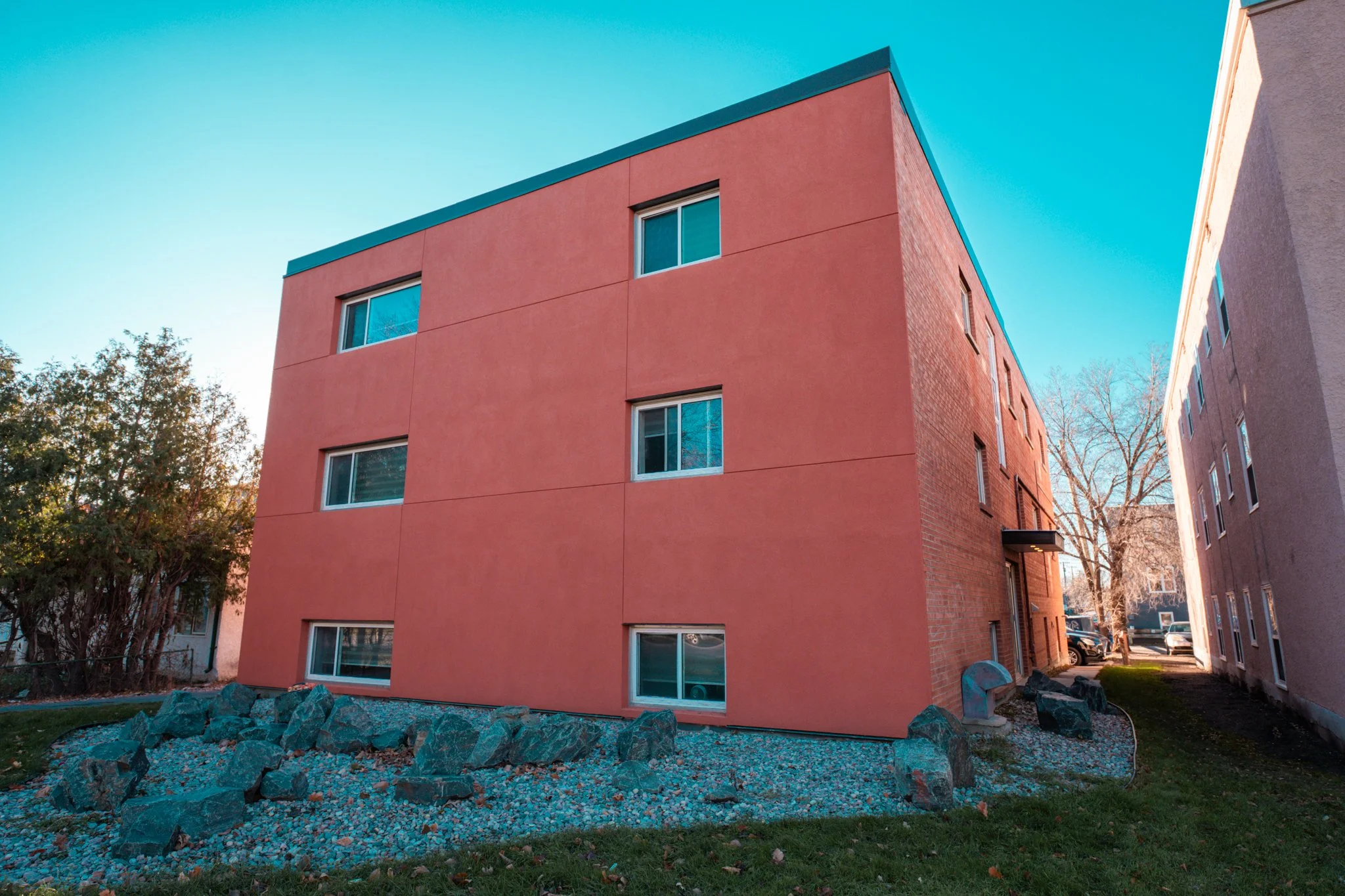
A building purchased in good faith.
Rents increased dramatically.
Tenants paying well above registered limits.
Renovations done too long ago to count.
And a looming rent rollback of nearly $200,000.
For many investors, this kind of situation is the end of the story.
For Arete?
It’s the beginning.
THE FULL STORY OF PROJECT ENFIELD
PROBLEM
Our client had purchased the property and immediately renovated the units, with the honest intention of increasing the rents and stabilizing the building. And to be fair, the work was done well.
The issue?
The rent increases weren’t legal.

Here’s what we uncovered:
The previous rents were registered at ~$600, but new tenants were being charged $1,100–$1,300.
Renovations were completed more than two years prior, making them ineligible for normal above-guideline increases.
The Residential Tenancies Branch was now involved.
A rollback order was coming — and it was massive.
The building’s cashflow could collapse overnight.
The investor was staring at a loss that could wipe out years of effort.
And to make it worse, the building still had deficiencies:
Roof issues
Mechanical inefficiencies
Poor energy performance
No rebates claimed
Higher-than-normal expenses
The building looked stable on the outside — but financially, it was hanging by a thread.
Our client wasn’t negligent — he was simply misinformed, like many landlords who don’t understand Manitoba’s rent regulation rules.
This is where Arete stepped in.
The Strategy
Reconstruct the Entire Rent History
The first step was forensic work:
Review registered rent records
Compare with actual rents charged
Evaluate the renovation timeline
Identify what improvements qualified
Document deficiencies
We built a complete picture of the building’s financial compliance — something the investor had never done.
This allowed us to build a negotiable, defensible case.
Complete Fresh Renovations That Counted Toward Increases
We rebuilt a targeted improvement plan with two goals:
Capitalize on allowable above-guideline rent increases
Boost the building’s efficiency and NOI long-term
We completed:
A new roof
Hot water tank upgrades
A reworked boiler system
Energy-efficiency improvements
Repairs and replacements eligible for rebates
This achieved two outcomes:
New renovation capital that counted within the proper time window
Lower operating expenses that improved NOI and value
3
5
Apply for Above-Guideline Rent Increases
With:
The original renovation lookback
The new improvements
Efficiency upgrades
A clean, well-documented case
…we filed the AGI.
The Residential Tenancies Branch approved a substantial increase, allowing rents to move far closer to market and restoring the building’s financial viability.
And for this specific building, we achieved something rare:
The approved rents exceeded the “luxury rent” threshold, meaning:
The landlord can increase rents without future RTB approval
Rent control ceilings no longer apply to these units
This unlocked massive long-term revenue potential.
1
2
Request and Secure a Rare 3-Year Lookback
This was the turning point.
Under Manitoba’s regulations, landlords can only claim renovations completed within two years.
But because we understood the RTB system, we submitted a request for a discretionary three-year lookback, allowing:
Older renovation work to be considered
More capital expenses to count toward increases
A significantly stronger case for raising rents
Most landlords don’t even know this option exists.
We leveraged it strategically — and it extended the allowable renovation window.
This move cut the client’s potential losses in half before we even made new improvements.
4
Work with Efficiency Manitoba to Recover Cash
A big part of Arete’s advantage is knowing where money is left on the table.
We submitted the project for:
Energy rebates
Efficiency funding
Incentive programming
This helped offset renovation costs and added credibility to our AGI (Above Guideline Increase) application.
6
Negotiate the Rent Rollback
The RTB was initially seeking nearly $200,000 in rent refunds.
But we negotiated aggressively.
We presented:
The renovation evidence
The efficiency upgrades
The building deficiencies
The improvements made
The financial realities
The fairness principles applied
And we successfully reduced the rollback amount substantially, saving the investor from a catastrophic financial hit
Reposition the Building for CMHC Financing
With:
Higher legal rents
Lower expenses
A more stable NOI
A stronger financial story
We repositioned the building for:
CMHC refinancing at optimal rates.
7
This provided:
Long amortization
Lower interest rates
Stronger cashflow
The ability to recover invested capital
A stable long-term financing structure
The client went from “I’m about to lose everything” to “I’m getting all my money back.”
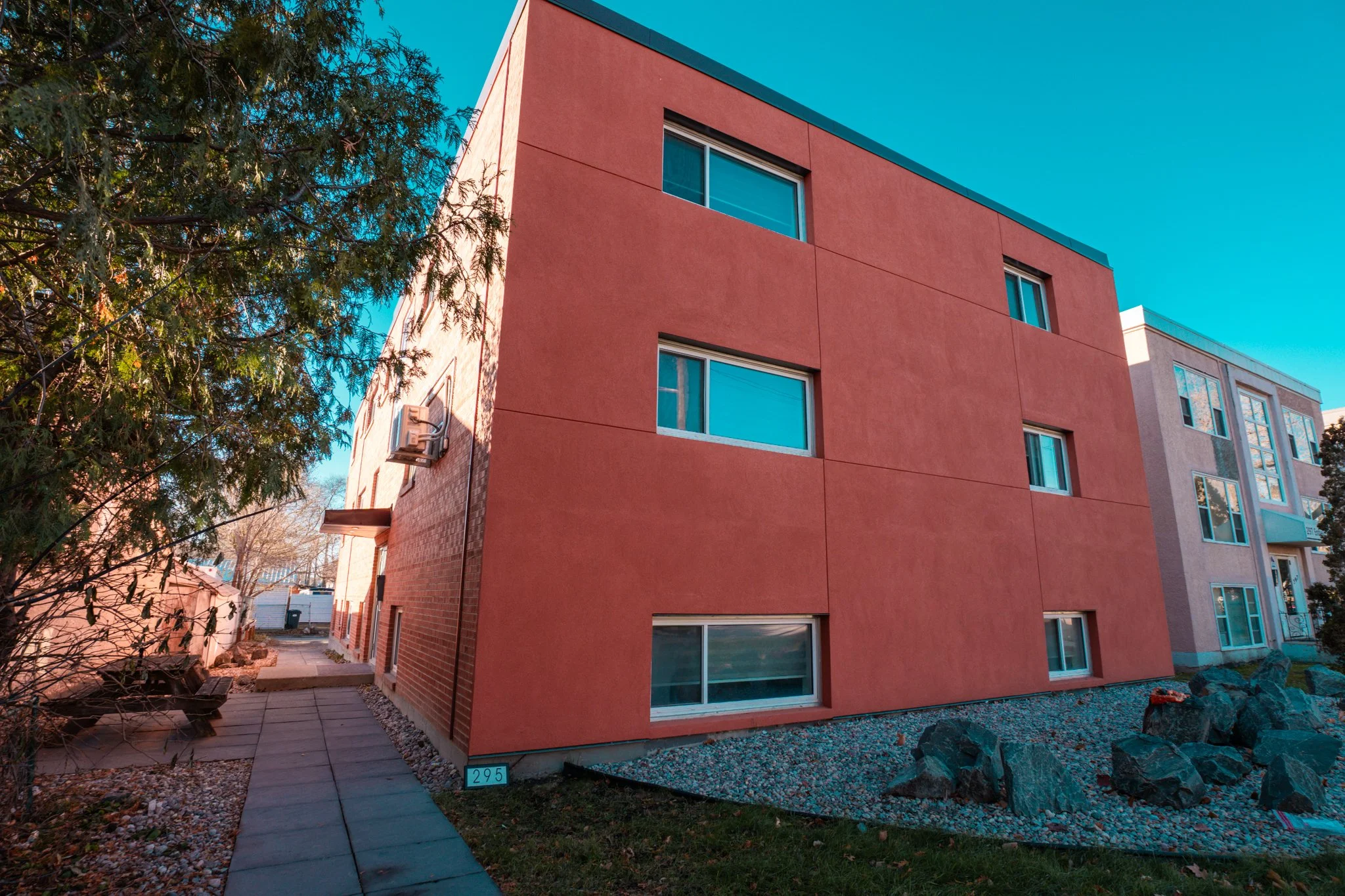

RESULTS
Rent increases approved
Legal increases brought rents near modern market levels.
Project Enfield is a perfect example of why investors call Arete.
We solve problems that appear impossible.
We restore compliance.
We rebuild financial health.
We negotiate aggressively.
We move quickly.
And we protect our partners’ investments as if they were our own.
Without intervention, this investor would have lost hundreds of thousands of dollars.
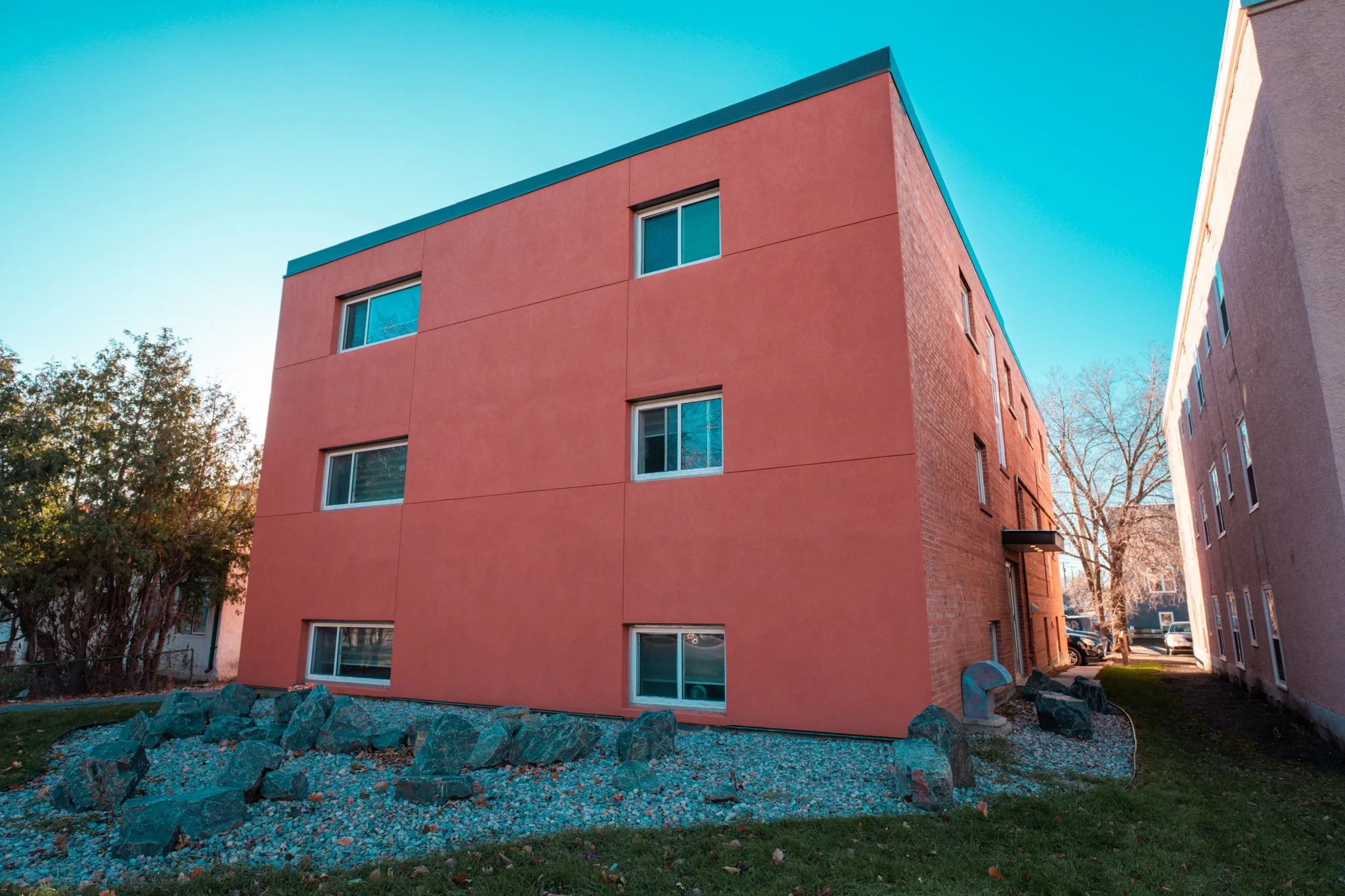
Instead, he now owns a clean, compliant, profitable building — and is positioned to recover 100% of his capital through CMHC refinancing.
That’s what Arete does.
CLOSING
Fresh renovations improved NOI and property value
Strategic, targeted improvements made the building more efficient.
Rebates and grants secured
Efficiency Manitoba added direct financial value.
Future rents no longer under strict rent control
Thanks to surpassing the luxury rent threshold.
Investor saved from a near-fatal financial position
A sinking building was turned into a healthy, cashflowing asset.
Rollback drastically reduced
The investor avoided a near-$200k financial disaster.
CMHC refinancing now underway
Positioned for high LTV, low interest, long amortization.
Full compliance restored
The building is now legally and operationally stable.