
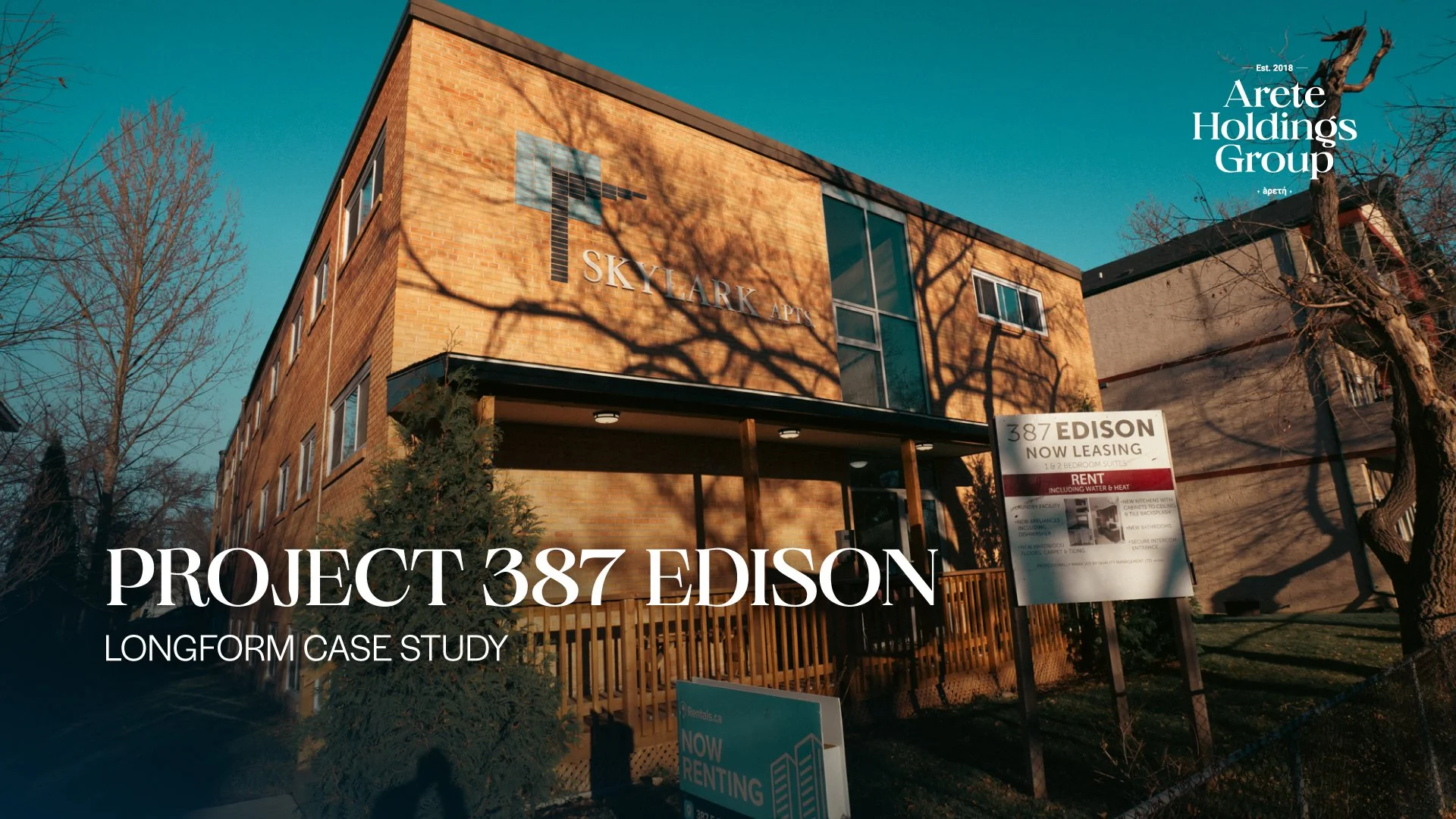
PROJECT 387 EDISON LONGFORM CASE STUDY
INTRODUCTION
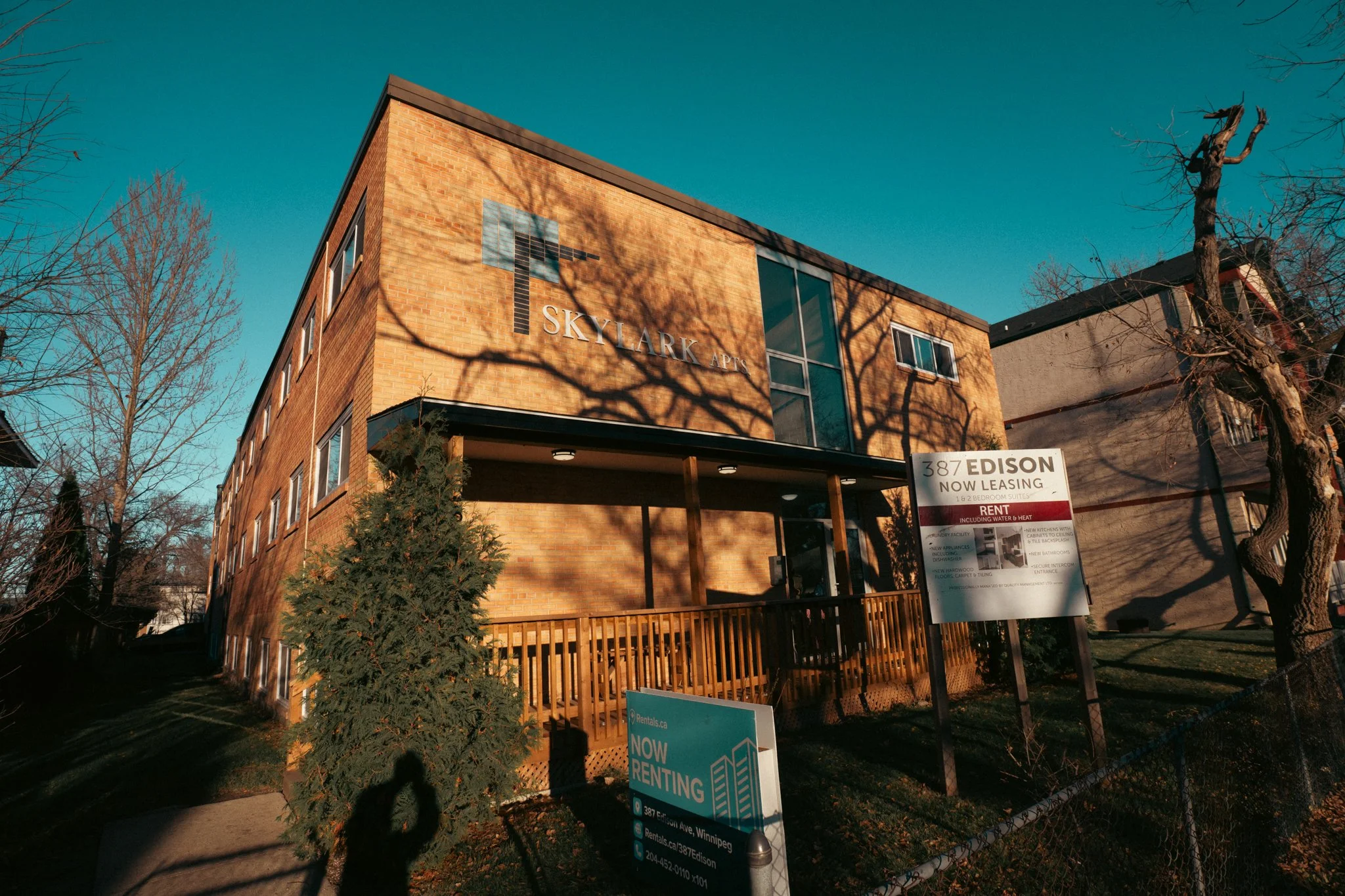
387 Edison is one of those rare projects where the opportunity wasn’t hidden — it was ignored.
Most people walked through the building and said, “Yeah, it’s decent. Nothing special.”
But when I walked it, I saw leverage. I saw inefficiencies. I saw one untouched unit that could change the financials.
And I saw a path to turn a “good” building into a exceptional investment.
This is the story of how we turned a stabilized, “nothing to do here” property into a complete home run with full capital returned in under eight months.

PROBLEM
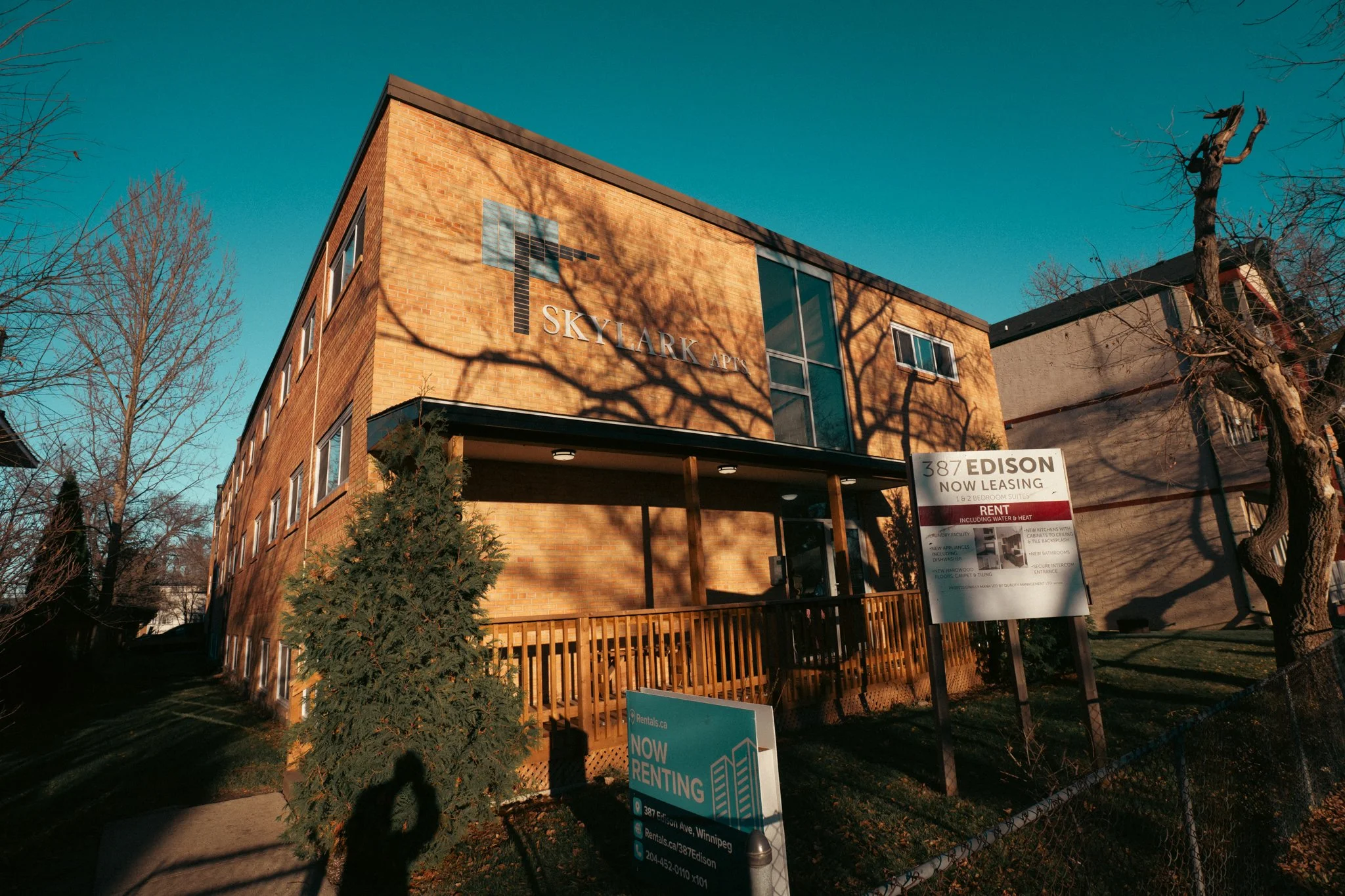
On paper, the building looked simple:
16 units
Concrete construction
Mostly renovated 10–12 years prior
Reasonable maintenance
Engineered hardwood floors
Good structure
But the issues were below the surface:
1. One unit was completely outdated
The old caretaker suite hadn’t been touched in 40 years.
The tenant had been there for decades.
The rent was way under value.
2. The windows were poorly done
They were cheap insert windows — not full-frame replacements — leading to:
Air leaks
Moisture issues
Higher energy costs
Tenant complaints
3. The boiler and hot water system were at the end of their life
This meant:
Inefficiency
Higher utility expenses
Near-term capital risk.
4. The roof required repairs
Nothing catastrophic, but not something you want hanging over your head
5. Market value was already priced in
On the surface, there wasn’t a clear “value-add story.”
Most investors want the obvious.
This one required foresight.

The Opportunity Others Missed
Most buyers walked away because they couldn’t see where the upside would come from.
But upside always comes from one of three places:
Income increase
Expense reduction
Financing optimization
This building had all three waiting to be unlocked.
And the key was the one unrenovated unit — the caretaker suite.
That suite alone allowed us to:
Increase rents
Pull the average rent up
Improve the building’s NOI
Create a financial story that made sense
Force appreciation
Then, when we combined that with reducing expenses through efficiency improvements, the numbers jumped again.
And that led to the biggest lever of all:
CMHC financing.
Strategy
1. Secure the building off-market
We were brought this opportunity through a realtor who was also a partner in the building.
Because of that relationship, we had:
Early access
Clear understanding of the history
A chance to structure the deal before it hit crowded hands
This alone gave us an edge.
2. Identify the NOI drivers
We walked the entire building and pinpointed:
Where rents could legally be increased
Which renovations qualified for above-guideline increases
How much expense reduction was possible through modernization
How CMHC would view the improvements.
3. Renovate the caretaker suite
This was the most obvious value-add:
Full interior modernization
Increased rent
Stabilized tenant profile
It transformed one weak unit into one of the strongest.
4. Replace the boiler, windows, HWTs
We made the building more efficient with:
A brand new boiler system
Full modern hot water tanks
High-efficiency windows (proper replacements)
This triggered:
Lower utilities
Lower cap-rate risk
Better CMHC scoring
Better tenant satisfaction.
5. Work with Efficiency Manitoba
We leveraged grants and rebates because the improvements directly affected:
Energy consumption
Mechanical efficiency
Environmental performance
These rebates put money back in our own pocket.
6. Structure the financing
This was the magic.
We secured a 95% loan-to-value CMHC-insured mortgage on:
The purchase
The improvements
The future stabilized value
That allowed us to:
Defer the bulk of capital investment
Complete renovations
Trigger a draw on completion
Recover the money quickly
Create a high-leverage, low-risk position.
7. Build a refinance-without-refinancing strategy
Instead of waiting a year for a refinance, we:
Completed the renovations
Submitted the improvement reports
Triggered the CMHC future-value funding
Received the renovation capital back almost immediately
No refinancing.
No delays.
No extra legal fees.
This is the type of strategy most investors don’t know exists.
RESULTS
Building stabilized at a much higher valuation
The combination of renovations, rent increases, and efficiency upgrades boosted:
Cashflow
Appraisal value
Long-term resale potential

A prime long-term asset
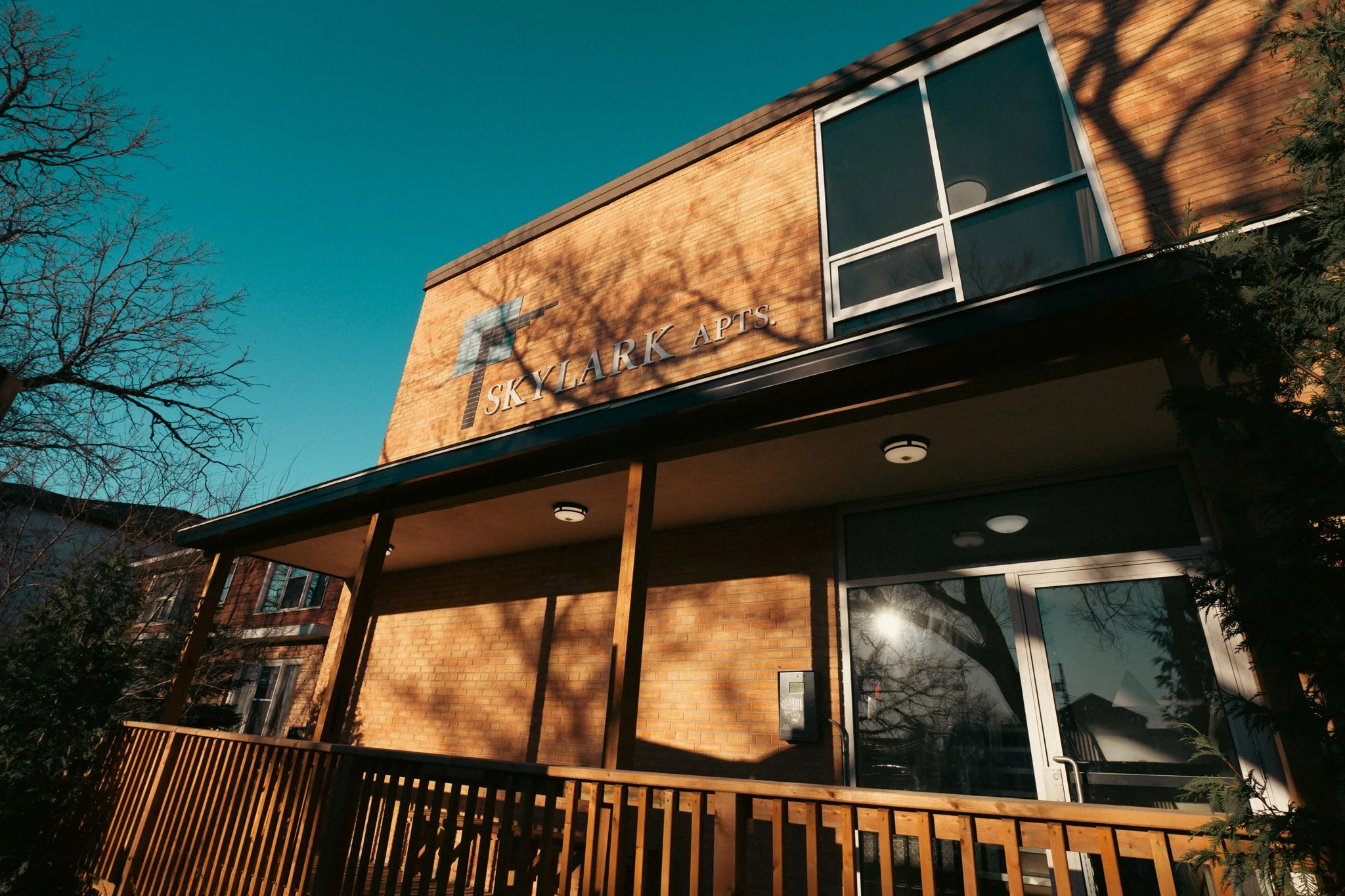
387 Edison is now:
Fully modernized
Tenant-stable
Energy efficient
Properly financed
Fully compliant
And we hold it with none of the original investment left in the deal.
Infinite return territory.
Full capital returned in under 6–8 months
Every dollar of invested capital was pulled back out through:
CMHC improvement draws
Efficiency Manitoba rebates
NOI increases
Lower ongoing costs
The new boiler, windows, and HWTs significantly reduced:
Gas usage
Electrical loads
Repair bills
This increased NOI even with the same rents.
387 Edison proves an important point:
You don’t need a distressed building to create a home run.
You need experience, execution, and the ability to see what others ignore.
This is what Arete was built to do — take “average” properties and turn them into powerful long-term assets.